
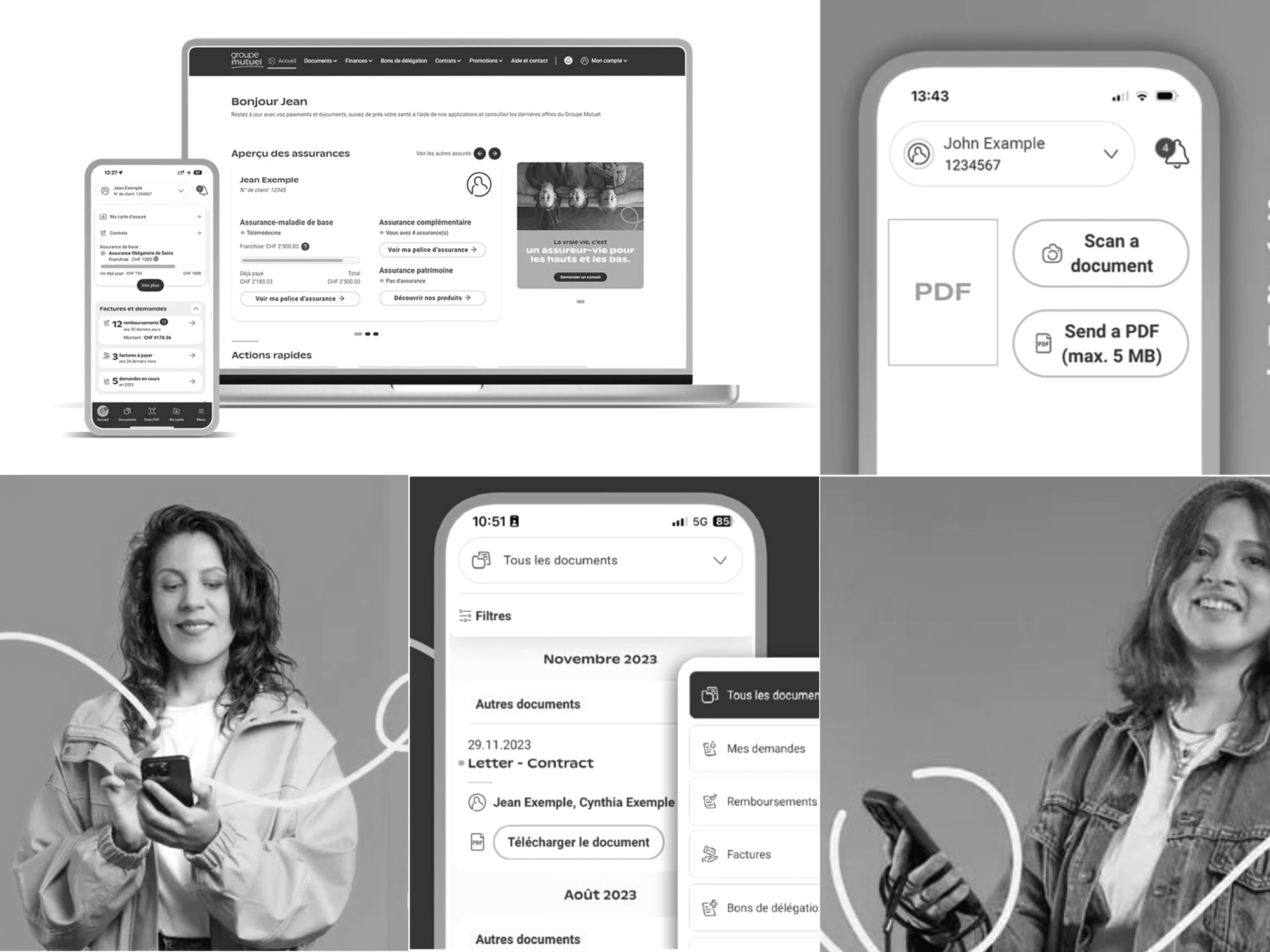
Transitioning to Full Digital Experience
A strategic initiative to transition private health clients from paper to a full digital ecosystem, aimed at raising experience quality and reducing operational costs.
Strategic Design, CX, Groupe Mutuel
Overview
As Project Lead for a strategic digital-first initiative, I orchestrated the transition of the private health client portfolio from paper-heavy processes to a unified digital ecosystem. Facing the challenge of a customer base with low digital maturity and high operational costs, I aligned marketing, product, and back-office teams around a risk-mitigated roadmap.
I utilized deep socio-demographic and behavioral analysis to design a transition that minimized friction. The initiative is projected to deliver CHF 1 million in annual savings by drastically reducing physical mailings and support calls, while simultaneously driving a 15% increase in digital engagement and maintaining customer satisfaction stability during the shift.
The challenge
- Low Maturity: Only 50% digital adoption; 30% of users still on postal mail.
- High Costs: Excessive printing/mailing and support call volumes.
- Risk: Transitioning without causing confusion or complaints.
Role: Project Lead
- Orchestrating the transition across marketing, product, and back-office.
- Draft strategy & roadmap with sponsors.
- Coordinate cross-functional teams.
- Estimate economic gains & risk mitigation.
- Oversee UX/functional needs.
Methods & Deliverables
- Service Blueprints & Journey Mapping.
- Hypothesis-driven research & Analysis.
- Mobile/Web User Flows.
- PowerBI CX Dashboard.
- Dedicated customer support process.
Key Impacts & Outcomes
Cost savings per year realized through reduced mailing and support.
Increase in Notification CTR from the Client Space.
Increase in retention for the invoice feature.
On satisfaction despite major transition.
Visual Showcase
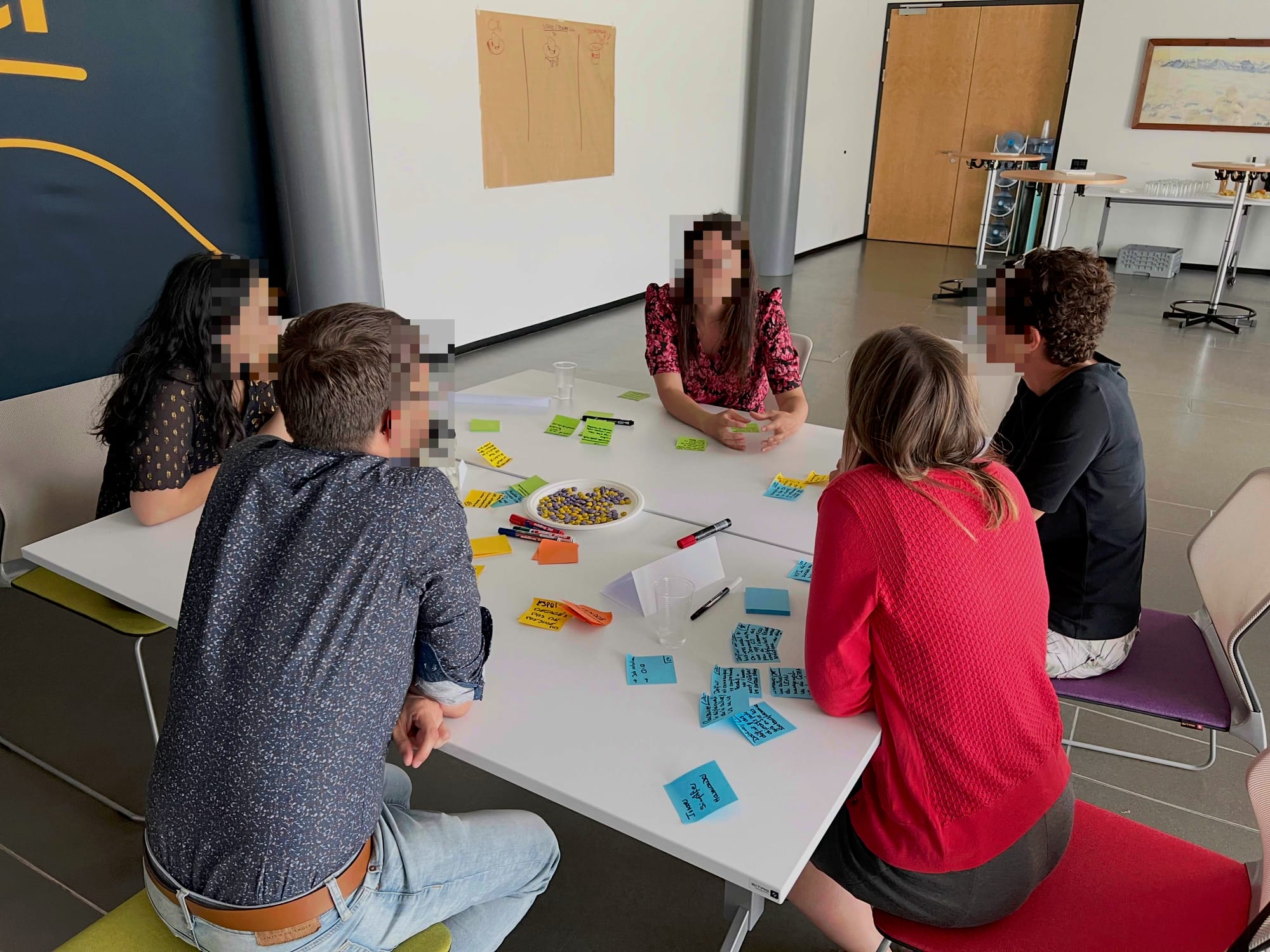
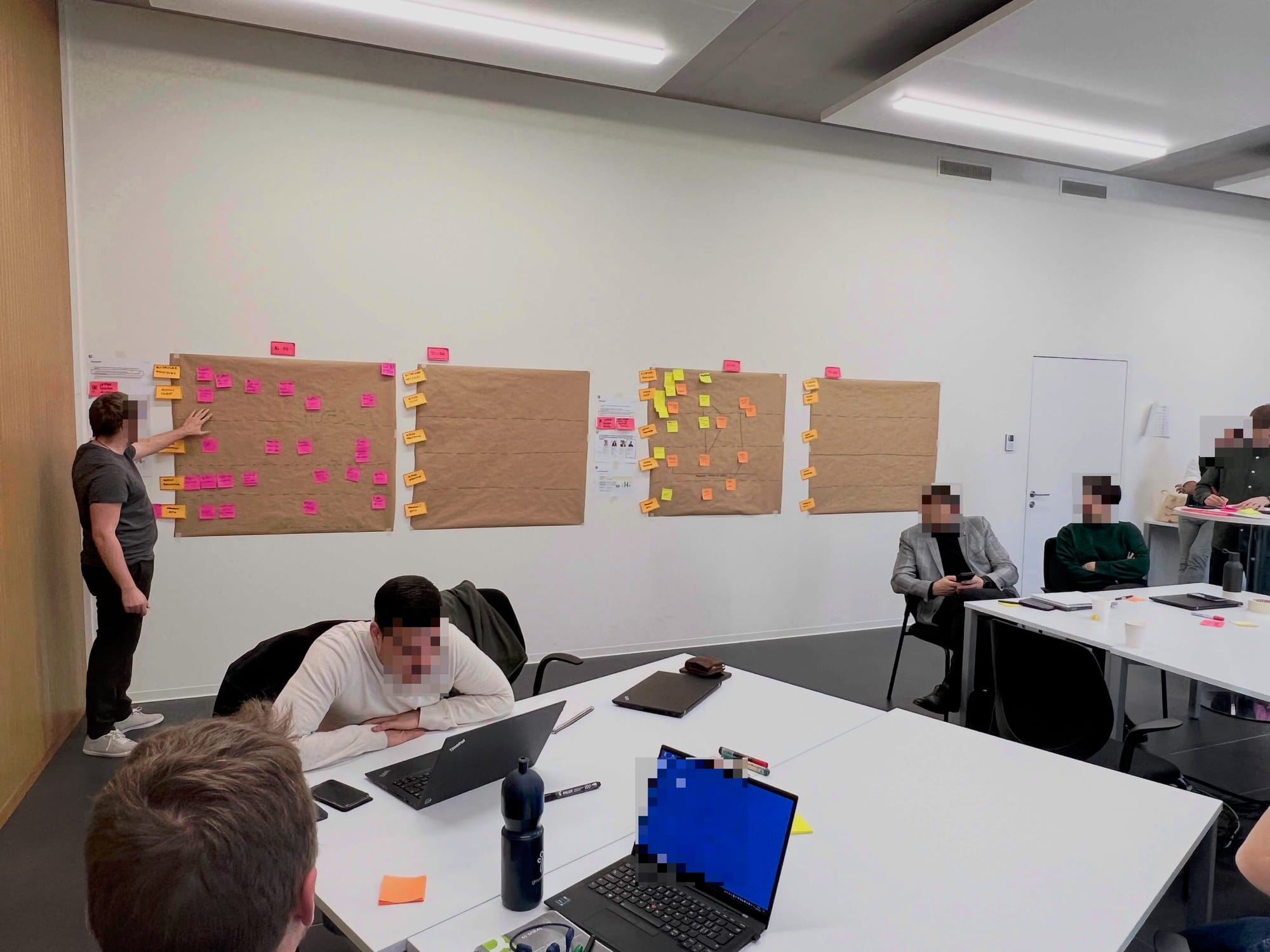
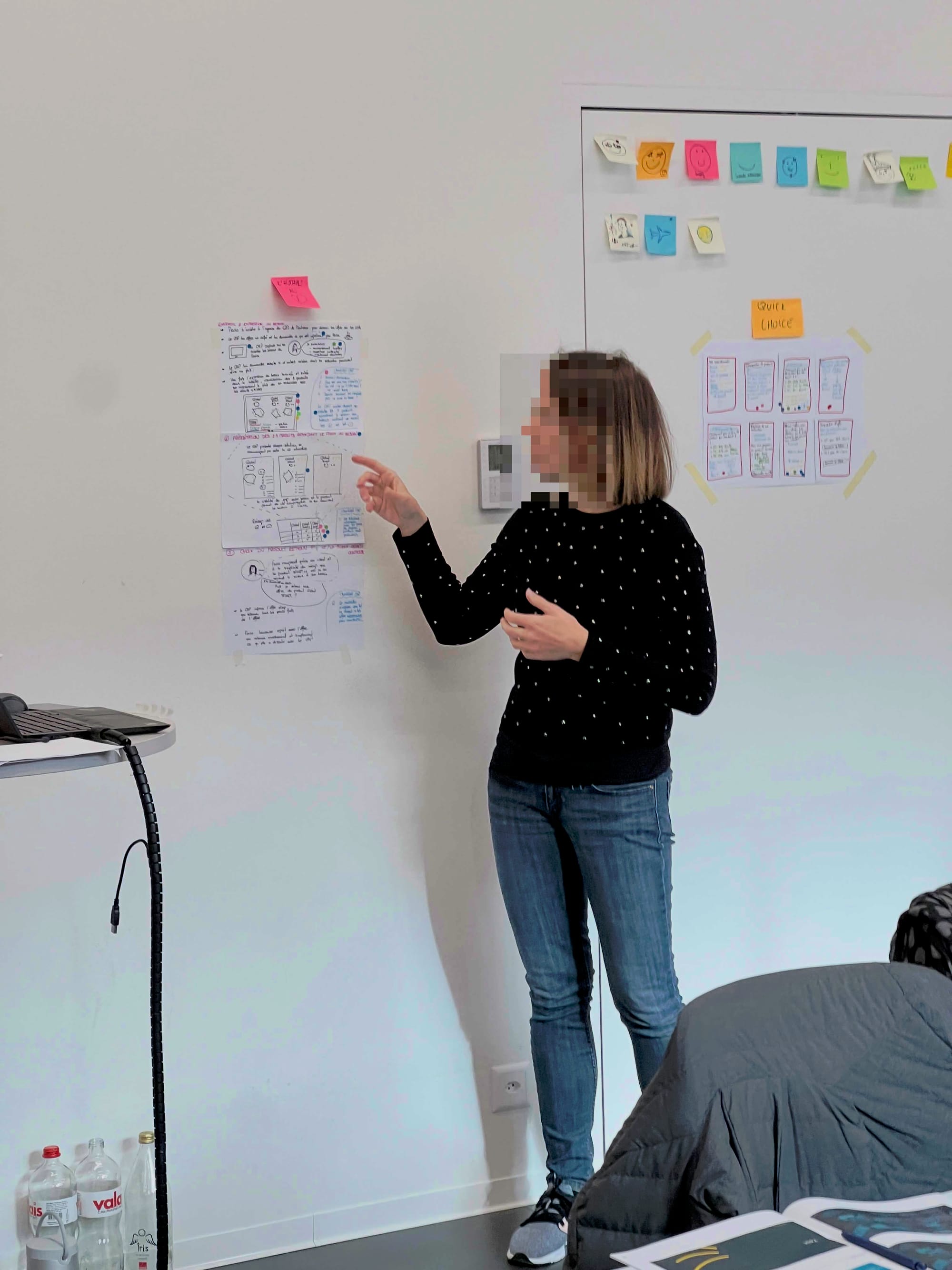
Co-creation workshops
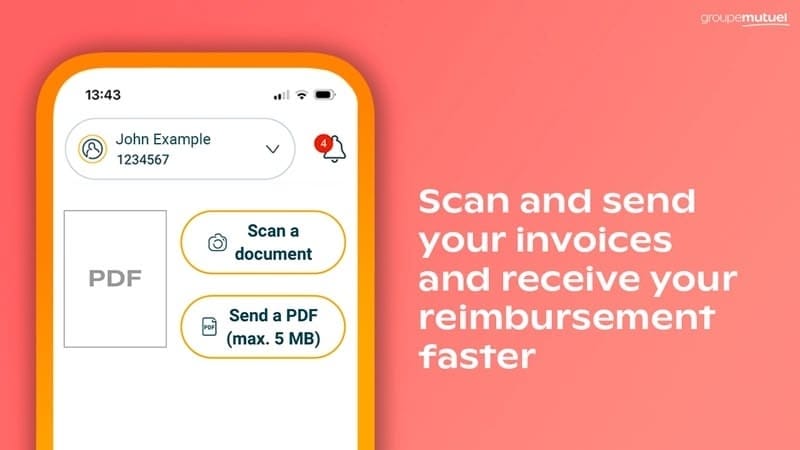



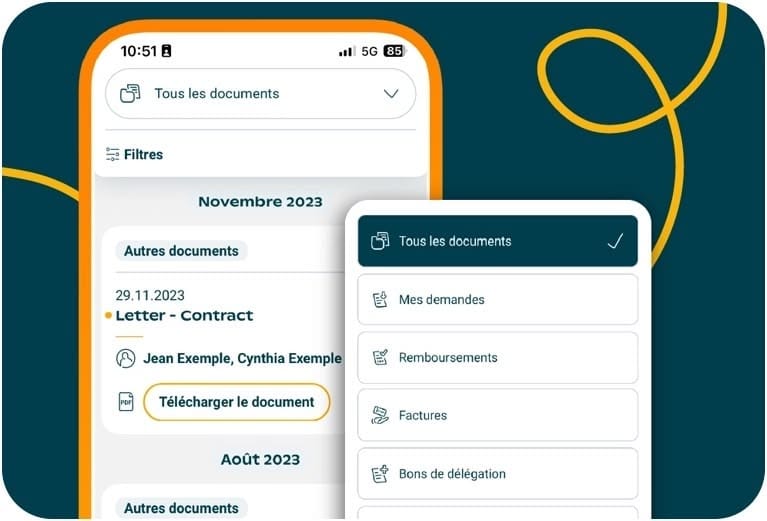
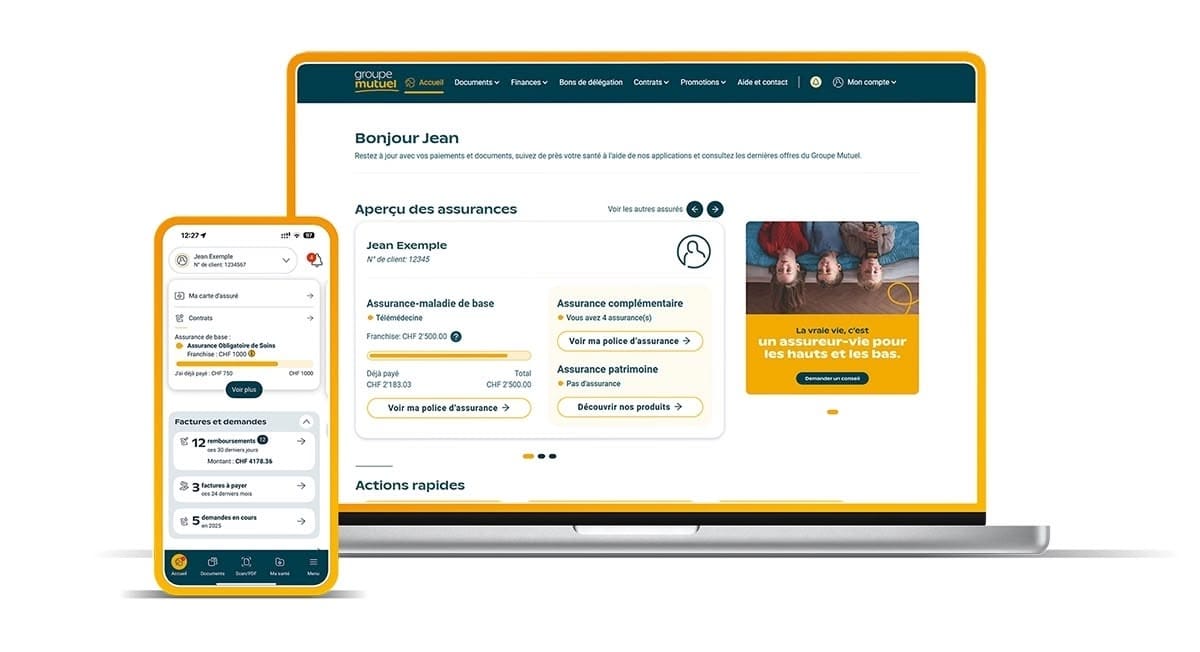
Promotional material

Scaffolding a Design Office
Standardizing UX practices, tools, and digital product metrics to build the foundation of a modern Design Office.
Design Ops, Management, Groupe Mutuel
Overview
I spearheaded the foundational "Design Ops" initiative to transform a distributed, inconsistent design workforce into a cohesive, high-maturity Design Office. Identifying a lack of shared processes and blind spots in product data, I centralized the procurement of industry-standard tools (Figma, Maze, ContentSquare) and defined a unified operational governance.
I introduced a standardized "T-Shape" metrics framework, combining high-level UX Scores (SUPR-Q, CSAT, NPS) with granular product metrics (HEART). This resulted in the deployment of the organization's first Unified PowerBI Product Dashboard, enabling data-driven decision-making and allowing the team to scale user research efforts using AI.
The challenge
- Scattered: Designers distributed across org with no shared culture.
- Inconsistent: Mix of Agile/Waterfall, no unified tools.
- Blind Spots: Lack of shared knowledge or product metrics.
Role: Project Lead/Owner
Establishing governance and securing resources.
- Identify stakeholders & define governance.
- Secure budget allocation.
- Manage procurement (Legal/Compliance).
- Roadmap management.
Methods & Deliverables
- Inventory: Mapping tools, processes, and skills.
- Standardization: T-Shape Metrics (SUPR-Q + HEART).
- Tools: Procured Maze, Qualtrics, Figma, ContentSquare.
- Output: PowerBI Dashboard.
Key Impacts & Outcomes
Design tools & processes adopted across all teams, reducing friction.
Created the first consolidated PowerBI dashboard for UX & Product metrics.
Positive feedback from designers on defined roles, responsibilities, and standardized career paths.
Enabled AI-driven scaling of user research efforts through centralized tooling.
Cross-Channel Harmonization
Scaling up the component library into a fully-fledged Design System to address inconsistencies across Web and Mobile touchpoints.
Design System, Accessibility, Product Design
Overview
To resolve critical inconsistencies between marketing sites (Web) and client applications (Mobile), I led the scale-up of a basic component library into a comprehensive, cross-platform Design System. As Project Owner, I established a robust governance model involving recurring ceremonies to align Product Owners, designers, and engineers across conflicting tech stacks (Magnolia, React, React Native).
This initiative successfully bridged the gap between design and development, reducing technical debt and delivering shared accessibility (A11y) standards. The result was a significant increase in component reusability and a harmonized visual language that streamlined delivery velocity.
The challenge
- Fragmentation: Disparate experiences across Marketing sites and Client Apps.
- Tech Debt: Conflicting stacks (Magnolia, React, React Native).
- Gaps: No shared visual language or accessibility standards.
Role: Project Lead
Driving adoption and governance.
- Orchestrate governance with management.
- Align roadmaps with Product Owners.
- Manage external agencies.
- Secure budget & resources.
Methods & Deliverables
- Governance: Monthly ceremonies for pattern validation.
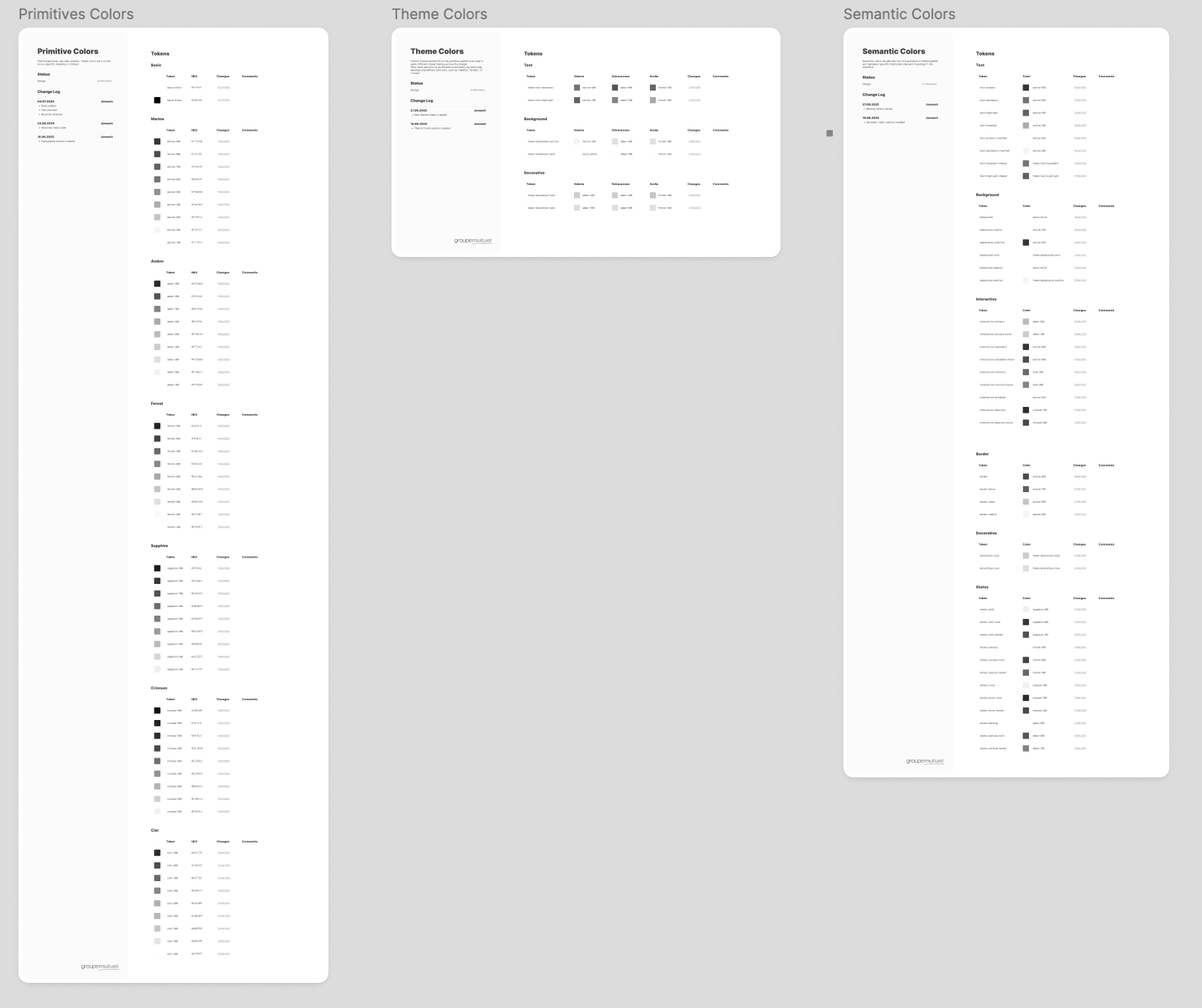
- Docs: Shared components, patterns, and A11y standards.
- Tech: Regrouped libraries & decision processes.
Key Impacts & Outcomes
Stakeholders unified on design system direction and visual language.
Increased reusability of cross-platform components and interaction patterns.
Established shared accessibility standards across all digital touchpoints.
Significant gap reduction in platforms which adopted the new design system.
Visual Showcase
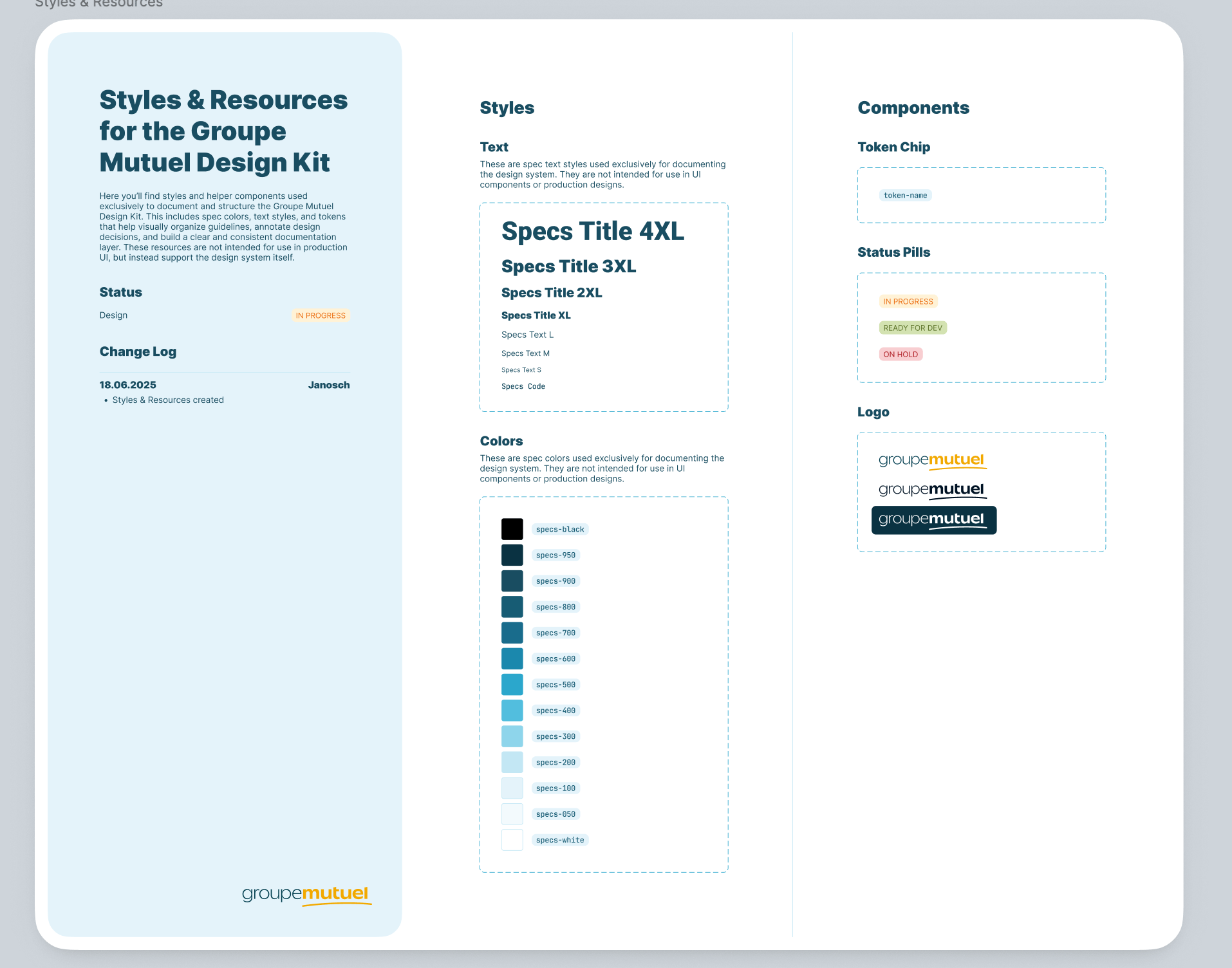
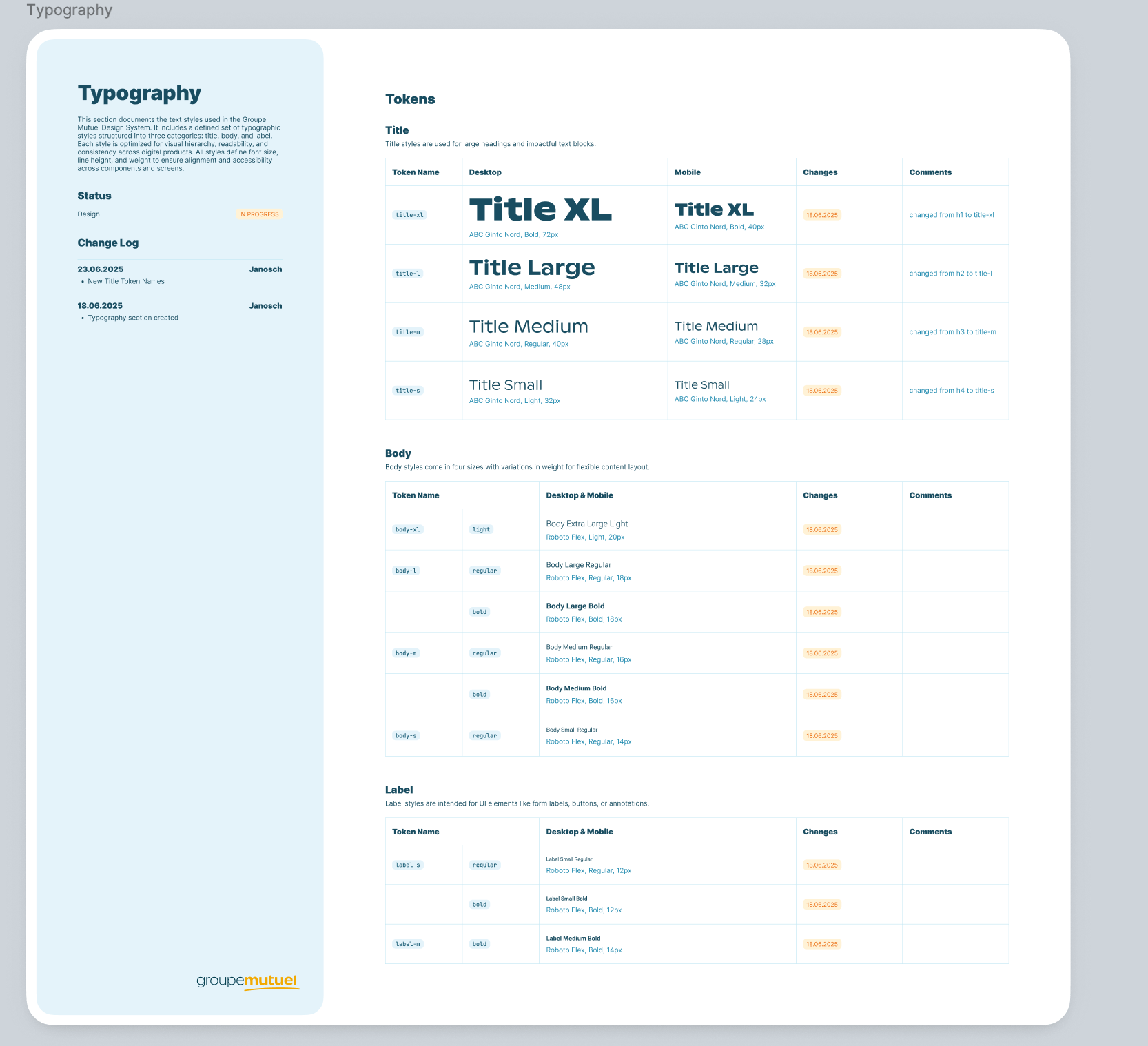
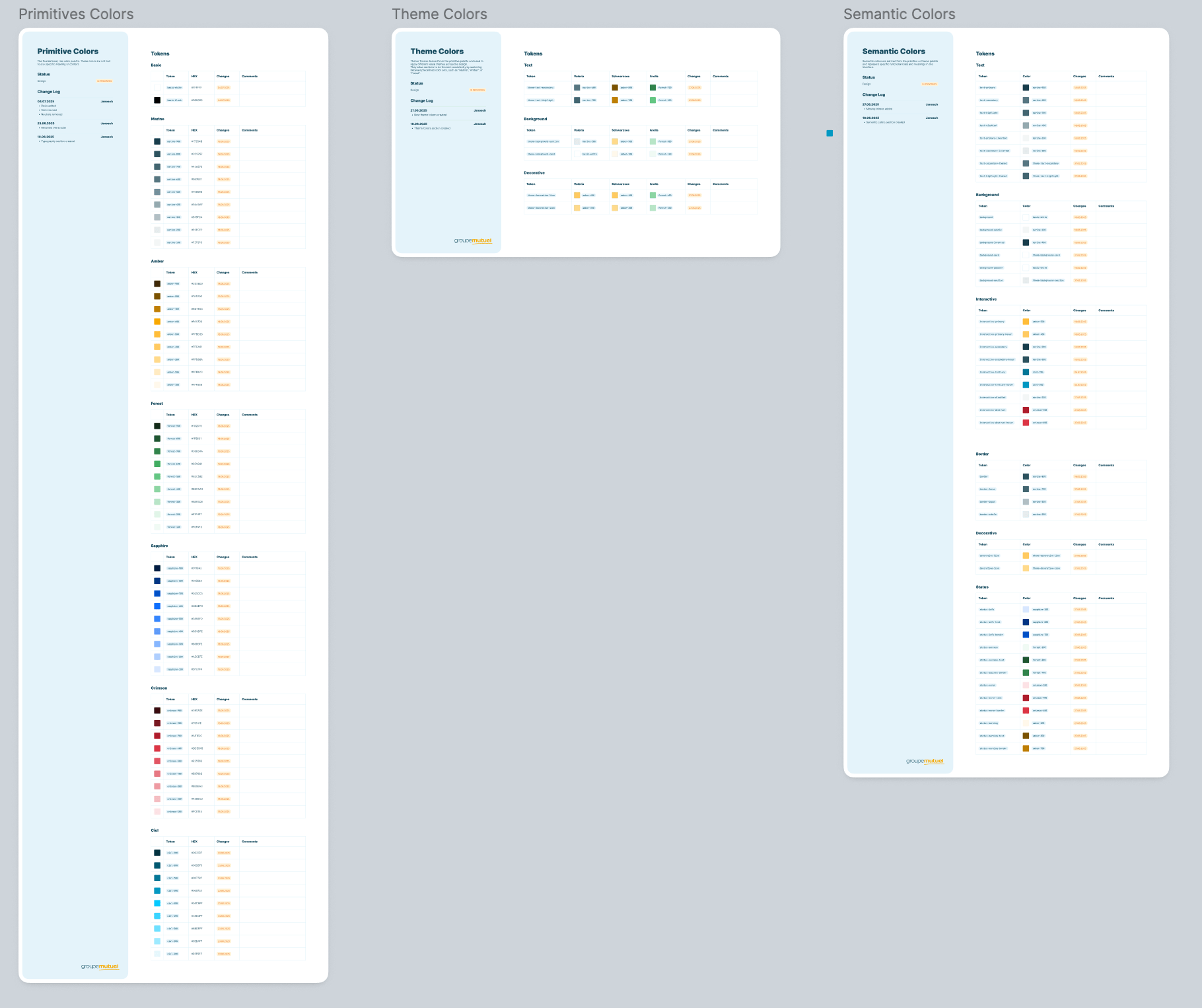
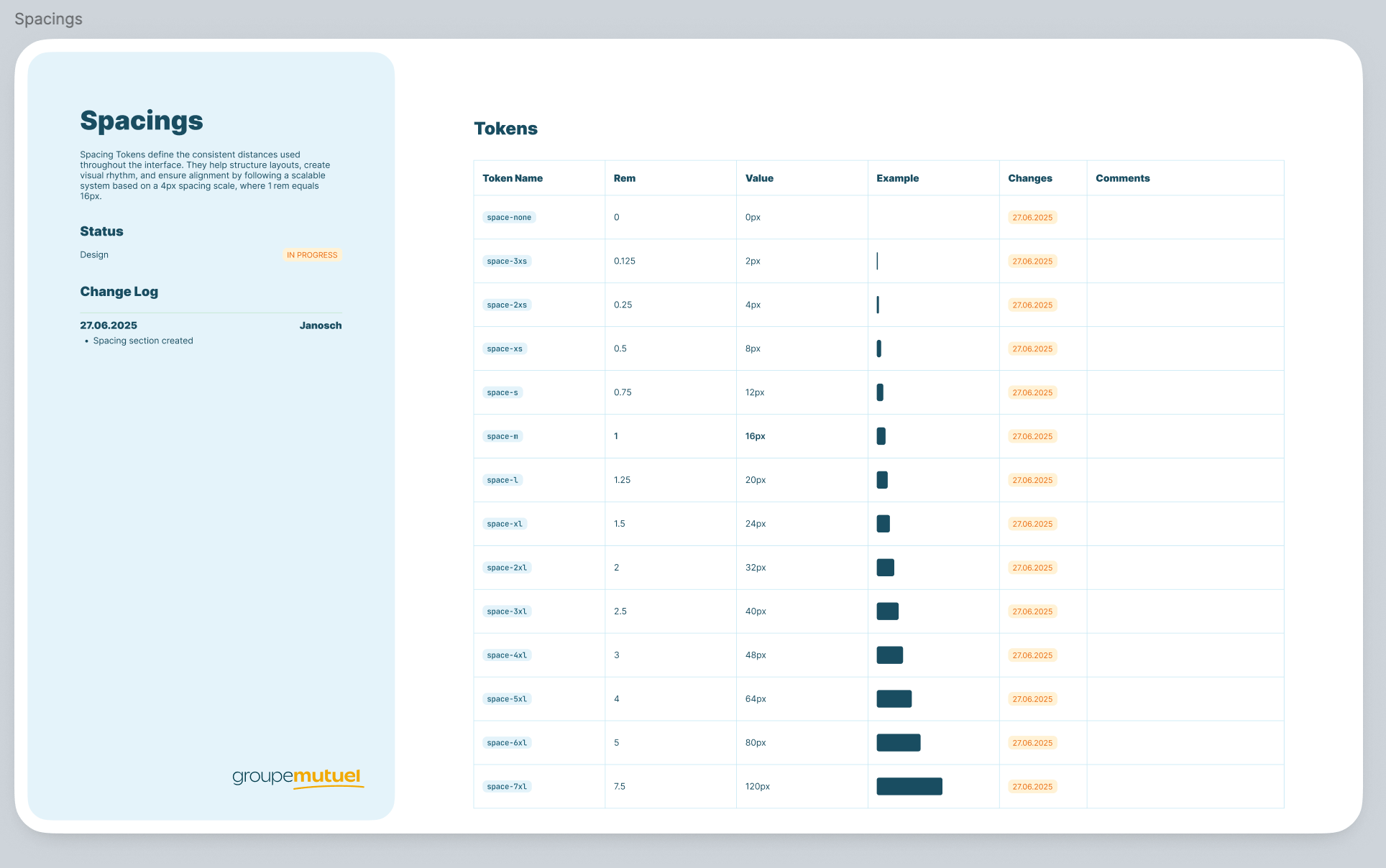
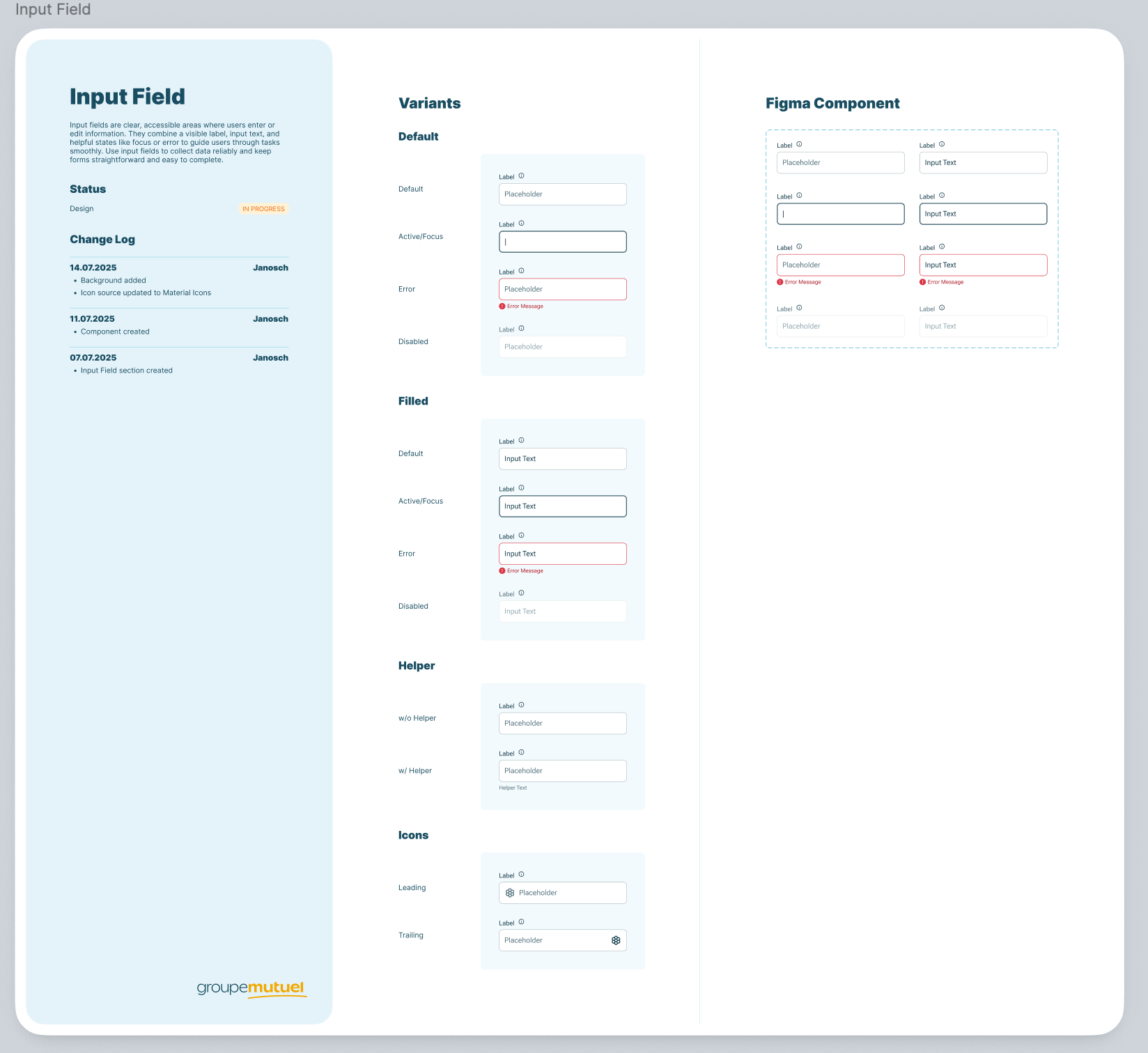
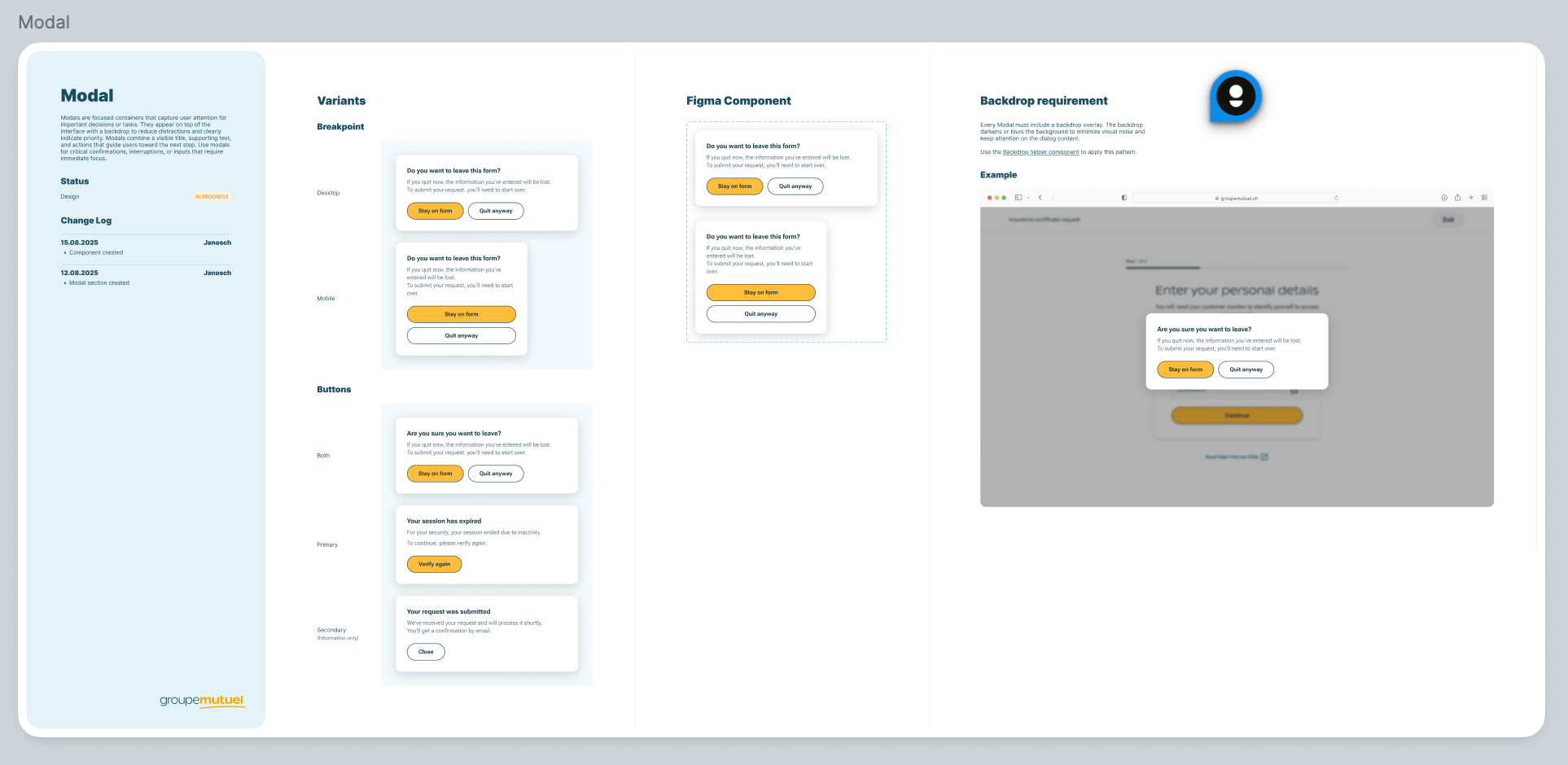
Preview of the Figma library
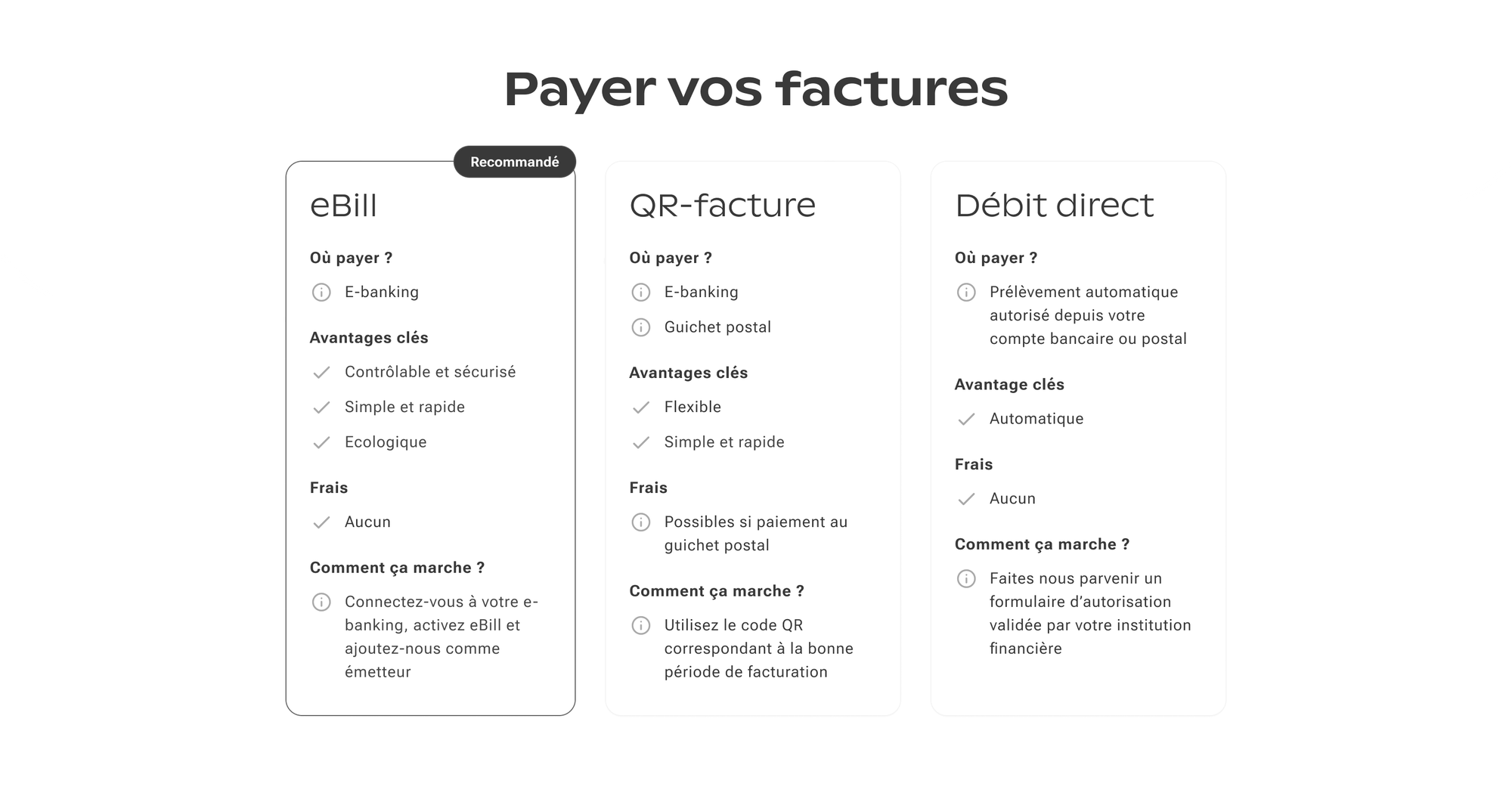
Rising the Self-Service Experience
Consolidating the self-service experience to automate internal processes, reduce calls, and improve response times.
Service Design, AI & Automation
Overview
As UX Lead, I re-engineered the self-service ecosystem to automate high-volume internal processes and lower the barrier to entry for clients. We identified that authentication hurdles were driving unnecessary support calls, so we developed a frictionless "No-Login" request flow and an AI-enabled personalized medical finder.
This strategic service design shift drastically improved efficiency, reducing request response times from 3 days to under 12 hours. Consequently, the initiative drove a 20% reduction in related contact center calls, proving that intelligent automation can simultaneously lower costs and enhance the user experience.
The challenge
- Barrier: High entry barrier (login wall) & low awareness.
- Inefficiency: Opaque request status led to high call volumes.
- Goal: Automate internal processes to reduce costs.
Role: Project Lead
Leading research and solution design.
- Map customer journeys & manage user research.
- Refine business needs & specify UX/UI.
- Feed product backlog & collaborate with devs.
- Monitor UX metrics post-launch.
Methods & Deliverables
- No-Login Flow: Automated requests via Customer Number.
- AI Finder: Personalized medical facility search (Location/Contract).
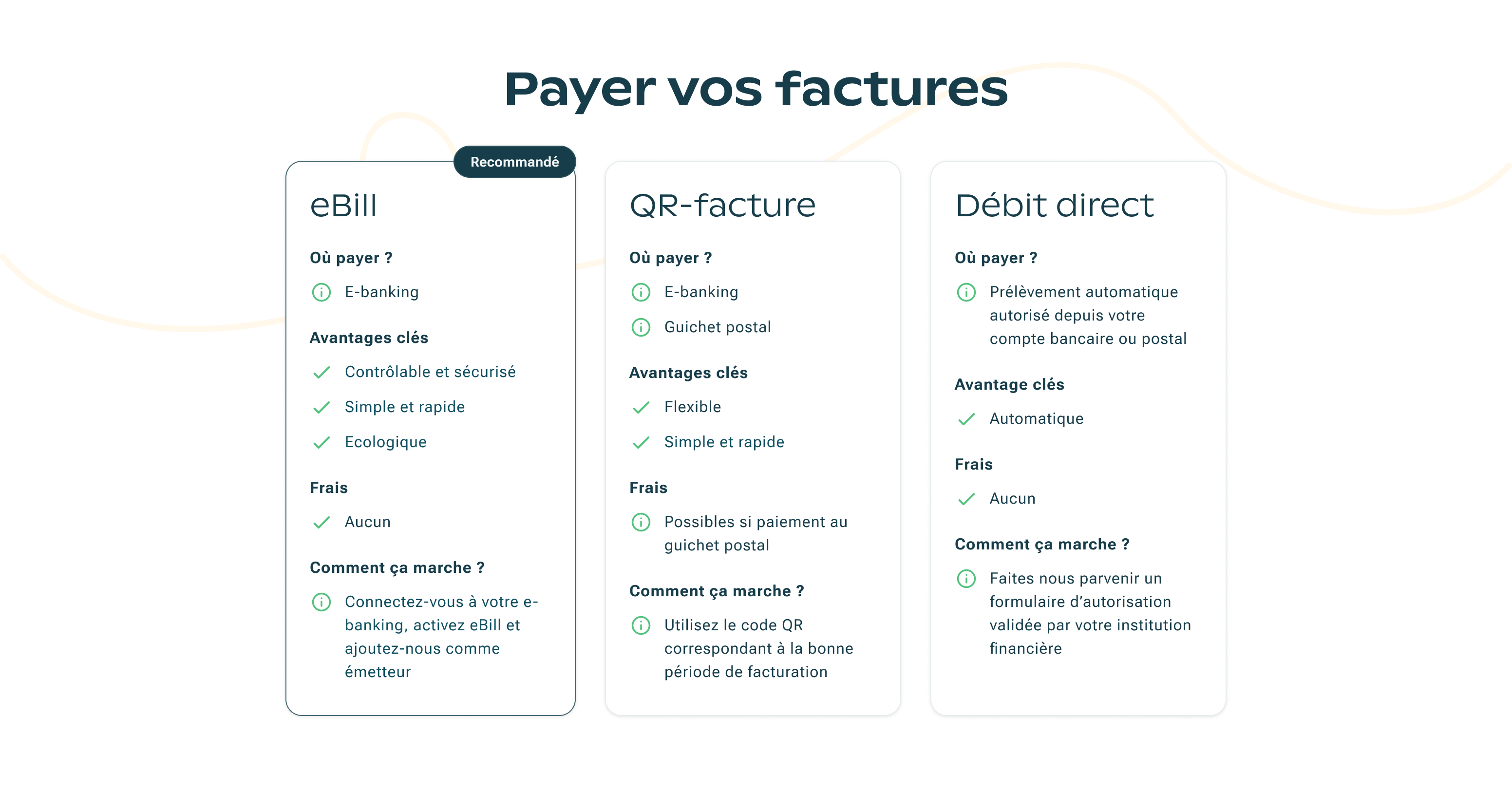
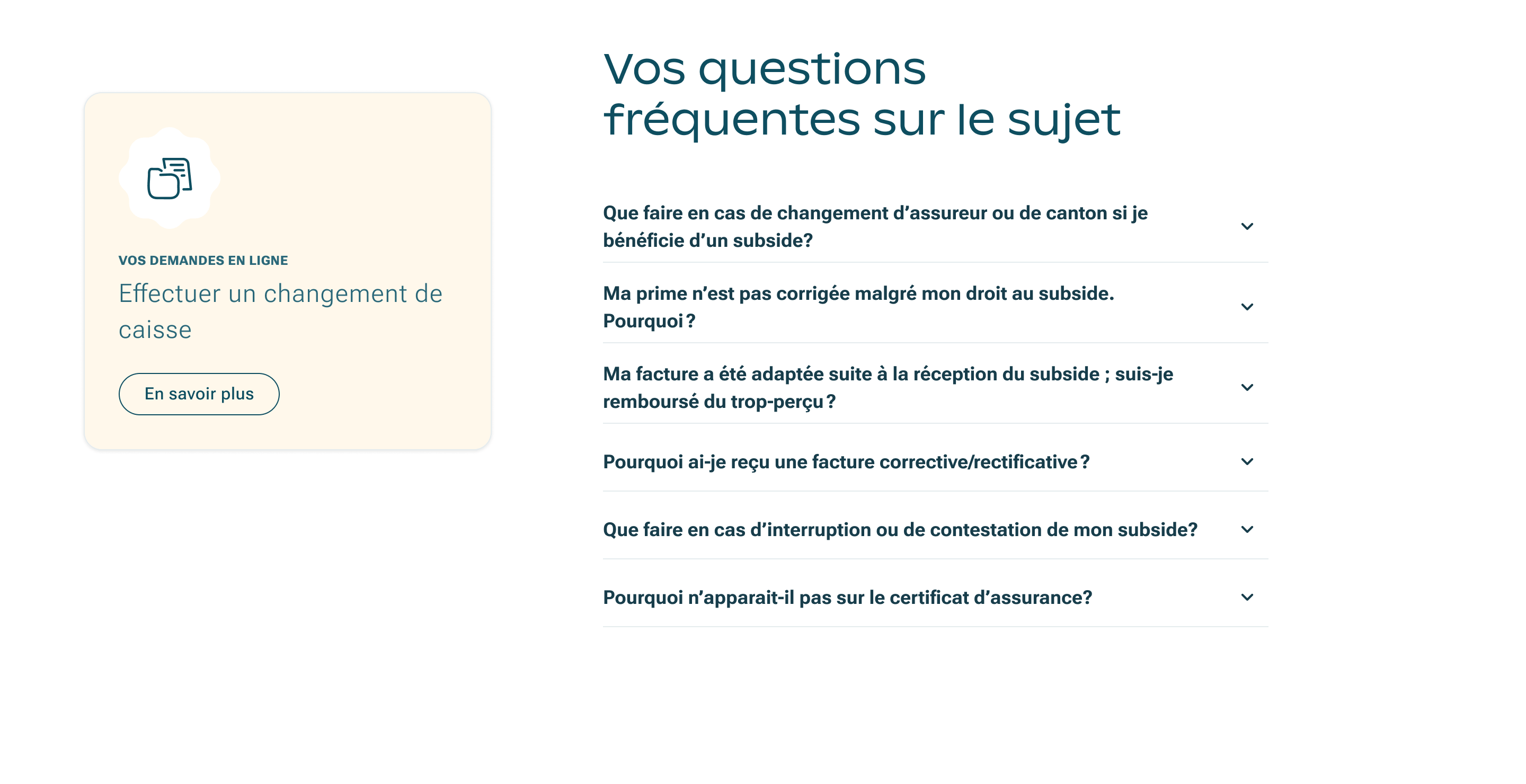
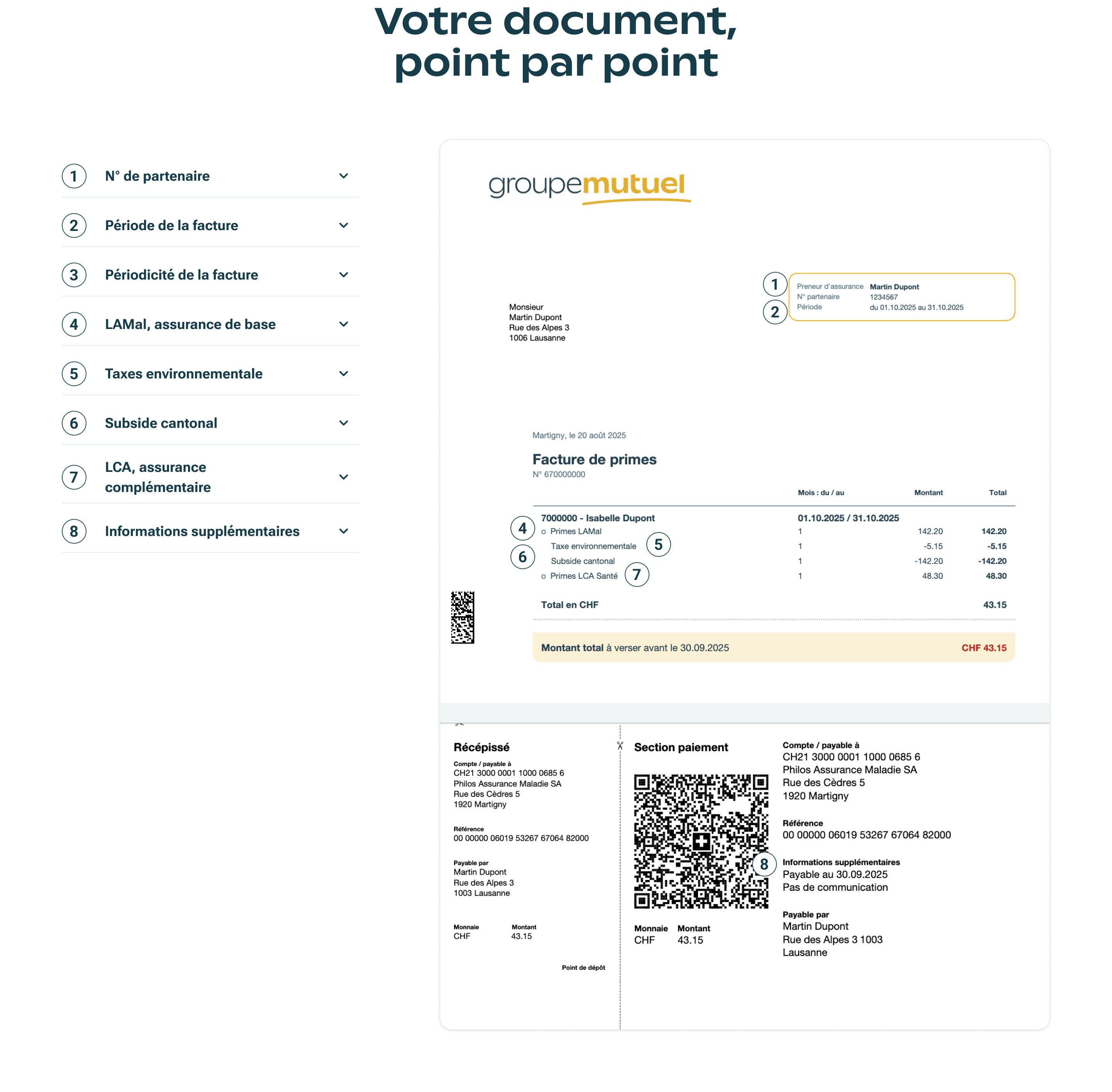
- Support: Publicly accessible user guides.
Key Impacts & Outcomes
Reduction in related call volumes to the Contact Center.
Reduced request-time-response (down from 1-3 days).
Successful deployment of AI-enabled personalized medical finder.
Maintained customer satisfaction levels while shifting to automation.
Visual Showcase
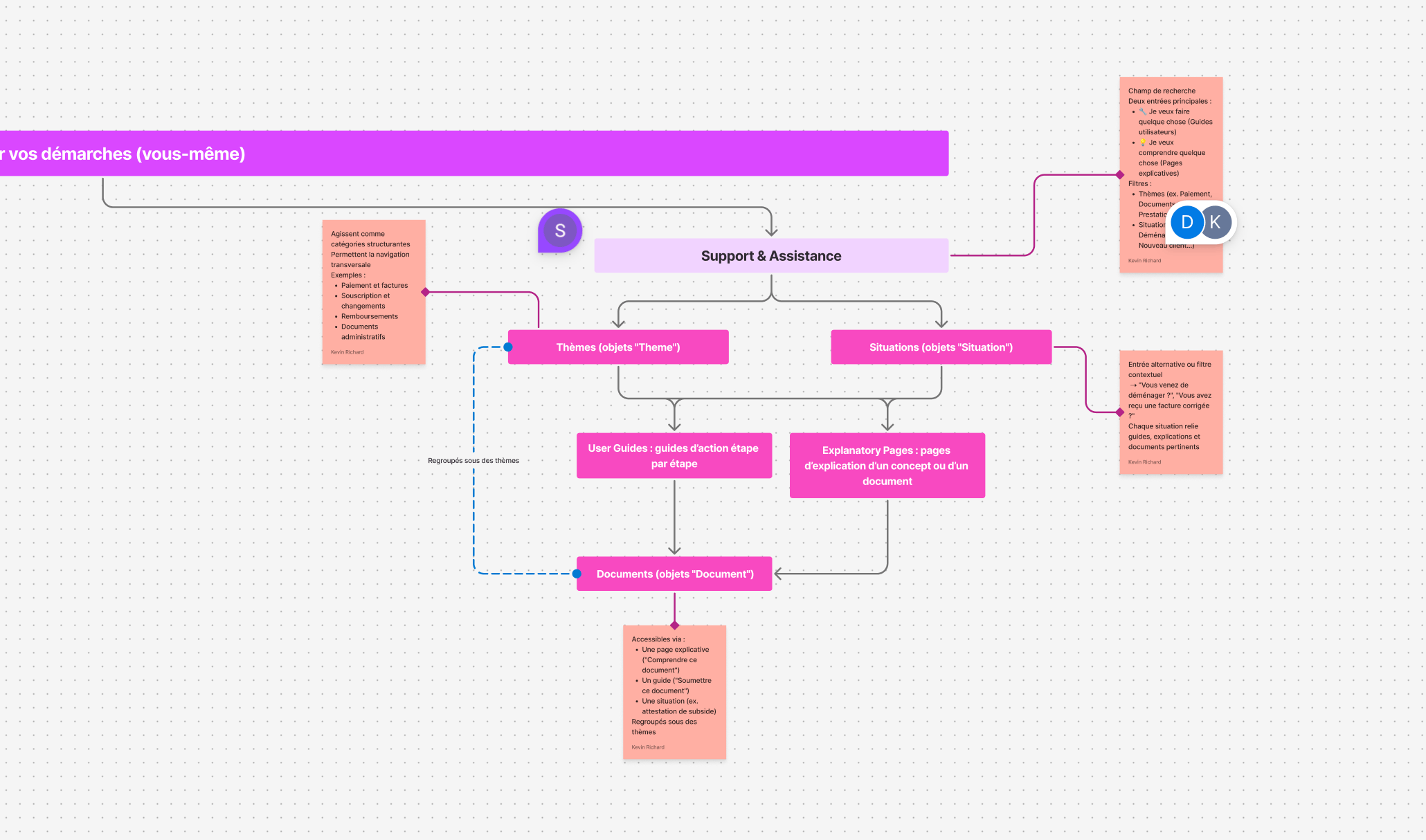
OOUX—Dynamic architecture and relationships
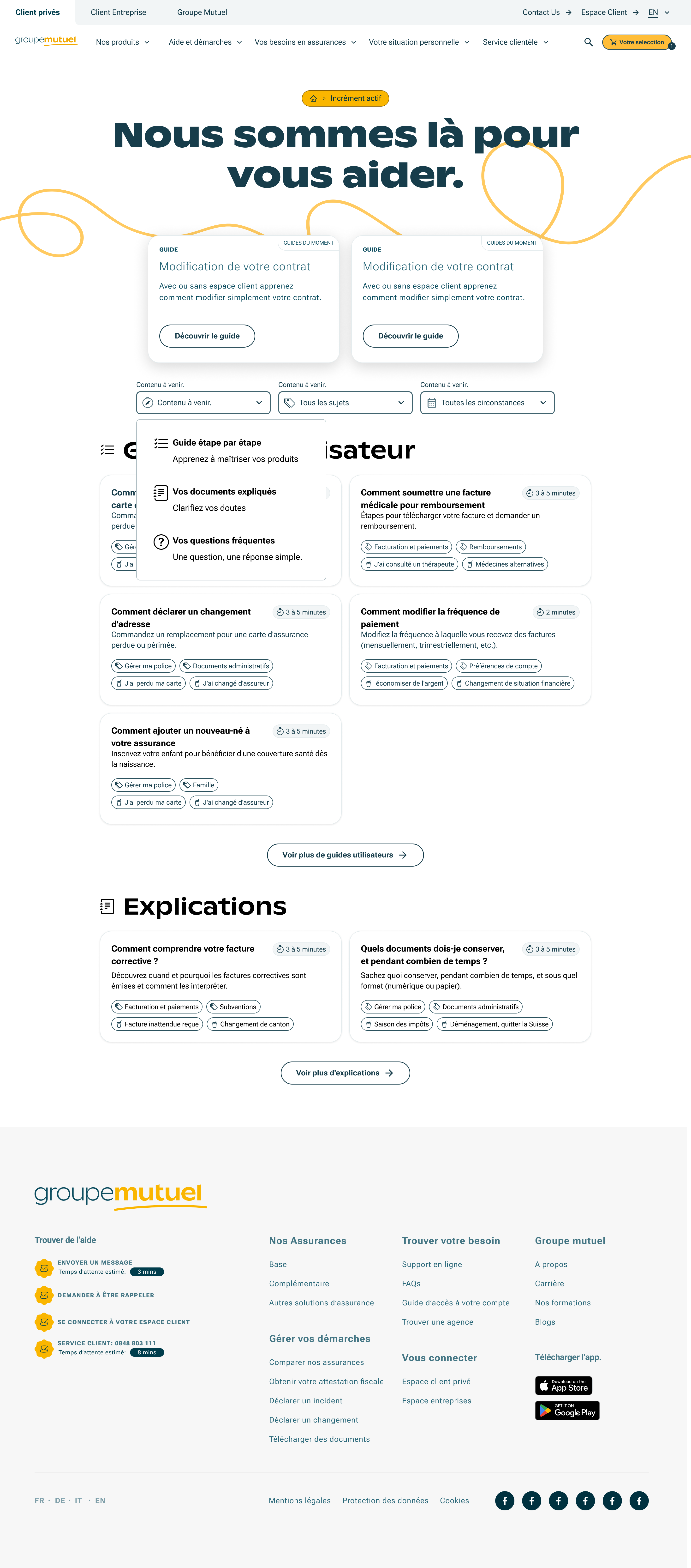

Developing the online support & assistance
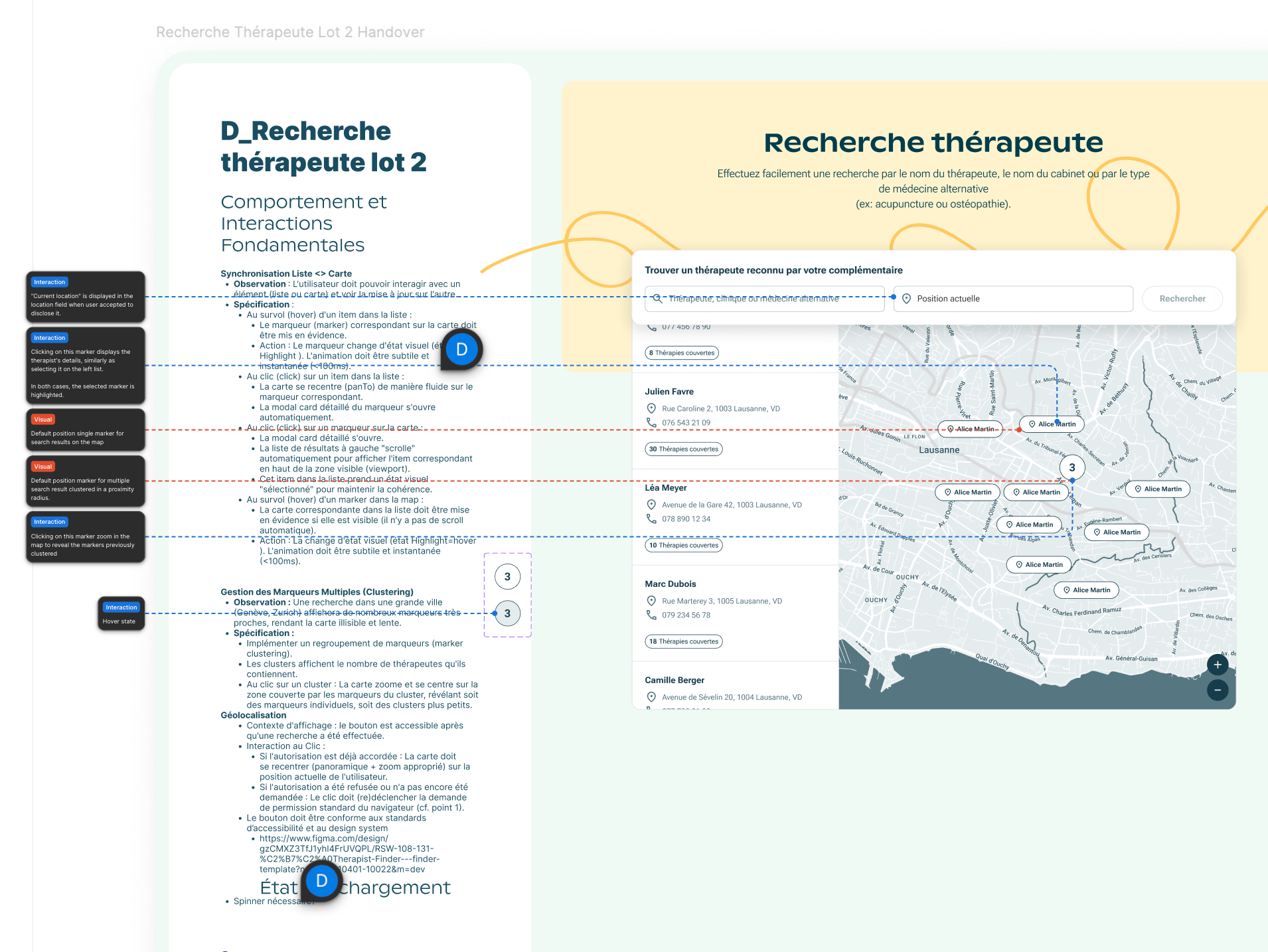
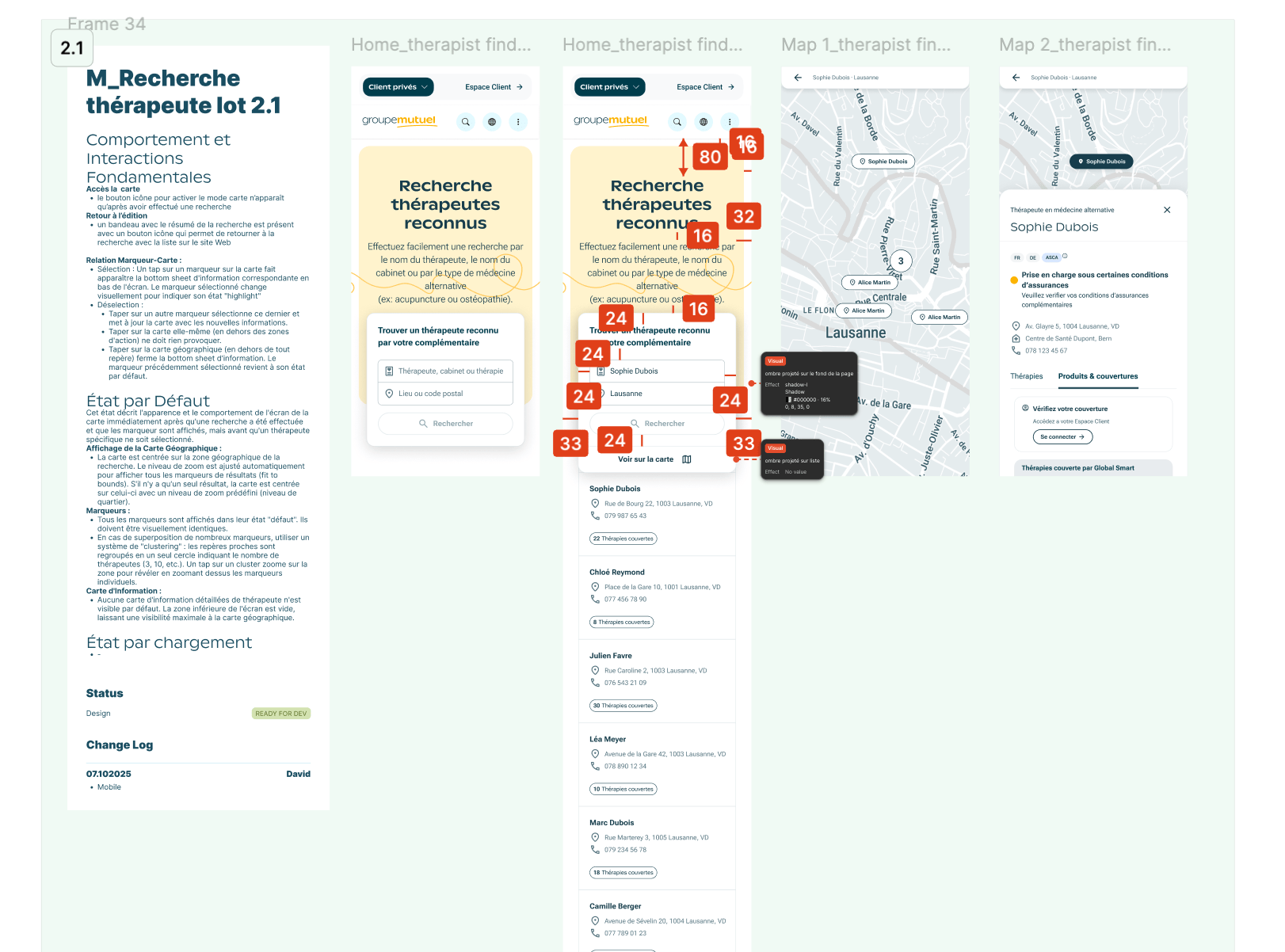
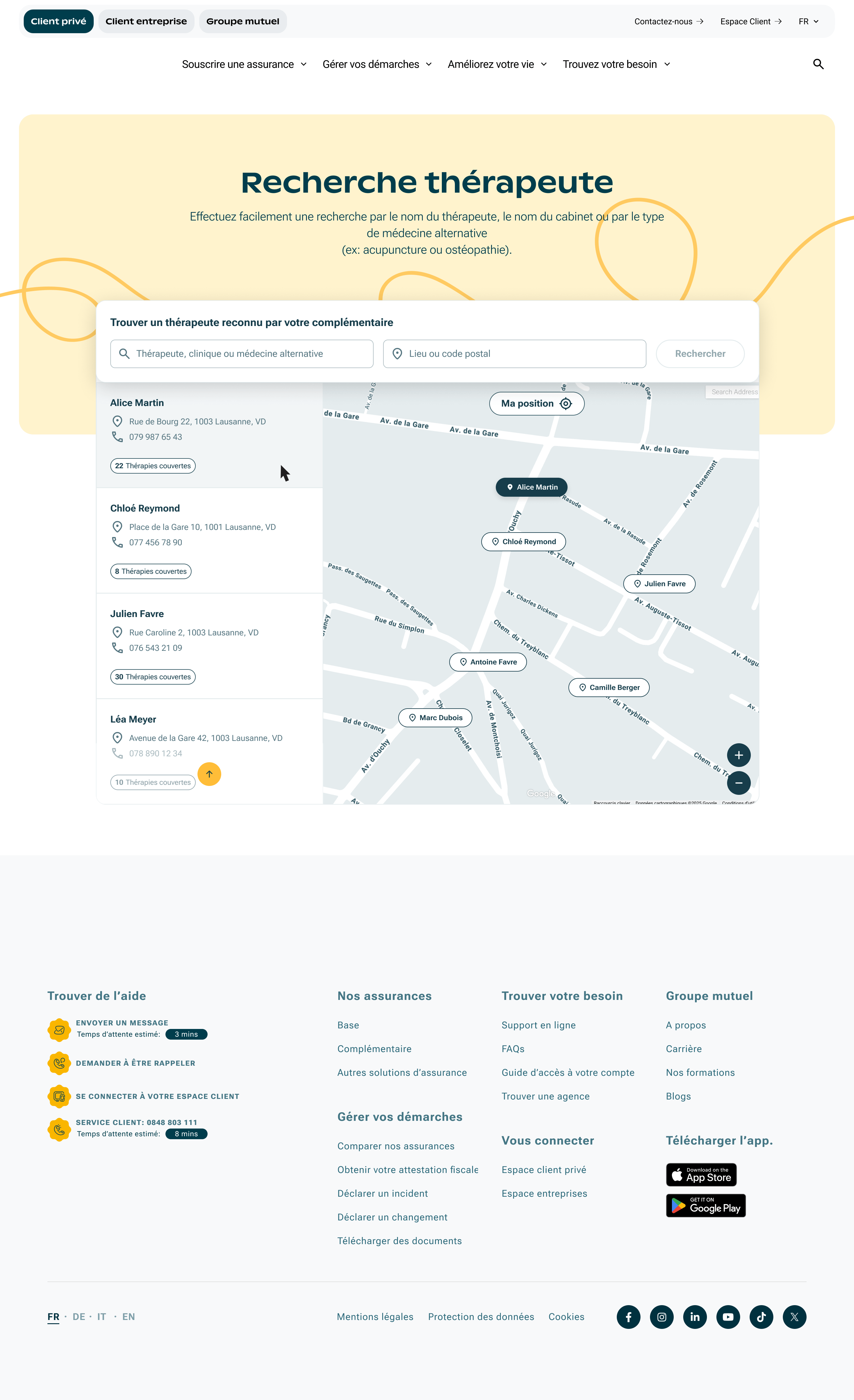
Developing the therapist and doctor finder


Access the released version of the therapist finder.
Overcoming Decision Paralysis: A Study in Choice Architecture
Using light recommendation systems to guide user choice and streamline the subscription process, in complex insurance catalogs to drive cross-selling and conversion.
UX Research, Behavioral Design, E-commerce
Overview
The Challenge: The Paradox of Choice Groupe Mutuel’s online subscription platform was suffering from high drop-off rates and low average order values. Despite high traffic, users were hesitant to convert. My audit revealed a critical psychological barrier: the extensive product catalog created a high cognitive load, leading to decision paralysis where users, overwhelmed by competing options, chose nothing at all.
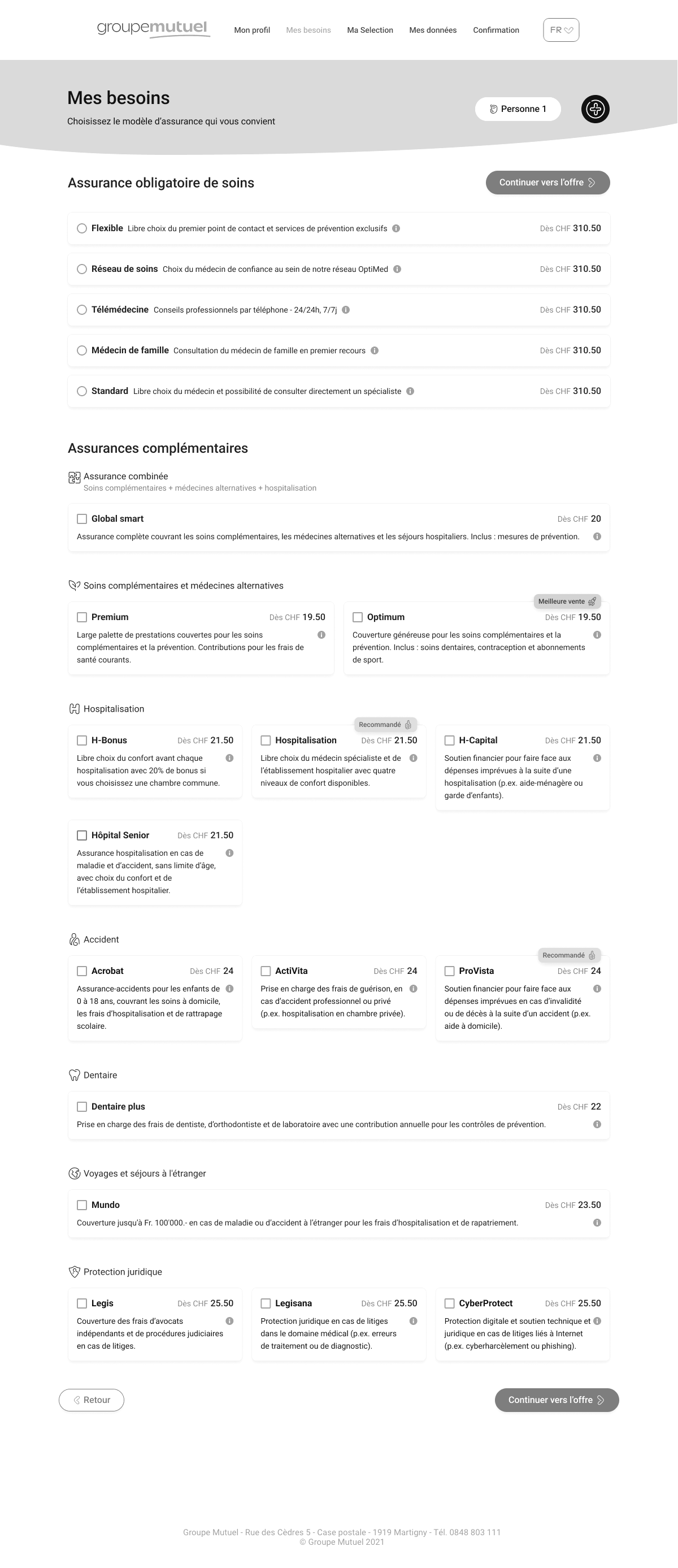
The Strategy: Agile & High-Leverage Intervention Operating under a strict release window and limited budget, a complex structural overhaul of the catalog was not feasible. Instead, I pivoted to a high-leverage strategy based on behavioral nudging. We introduced a "light recommendation system" utilizing visual cues—specifically "Best Seller" and "Recommended" badges. This acted as a cost-effective heuristic shortcut, reducing the effort required to compare complex specifications without requiring heavy backend development.
The Impact: Higher Value, Lower Friction Multivariate testing confirmed that structuring choice architecture significantly reduced time-on-task. Crucially, this "nudge" strategy successfully drove cross-selling: users were not only faster to decide but were also more likely to select premium options and add products across multiple categories, directly increasing the average cart size.
Business context
- Underperforming Sales Channel: Despite steady traffic, the online insurance subscription platform was seeing high drop-off rates and a low Average Order Value (AOV).
- Customer Friction: Qualitative data indicated low satisfaction with the subscription process, with users hesitating at critical decision points.
- Resource Constraints: The optimization initiative had to be delivered within a short release window and a tight budget, ruling out deep technical refactoring or catalog restructuring.
Role: Lead UX Strategist & Lead Researcher
- Research Strategy: designing the end-to-end mixed-method research plan to diagnose root causes and validate solutions.
- Methodology Selection: selecting the appropriate qualitative (heuristic evaluation) and quantitative (multivariate testing) frameworks to fit the tight timeline.
- Strategic Definition: defining the "high-leverage" intervention strategy (Behavioral Nudging) based on psychological insights.
- Analysis & Synthesis: conducting the statistical analysis of multivariate test results and translating raw data into actionable business recommendations.
- Execution: designing the choice architecture and overseeing the implementation of visual cues.
Key Challenges
- The Paradox of Choice: Users were overwhelmed by the density of competing options, leading to high cognitive load and "decision paralysis."
- Sense-Making Barrier: Customers struggled to differentiate between products and identify which insurance coverage best matched their needs.
- Constraint-Based Innovation: The solution needed to reduce cognitive load significantly without changing the actual product catalog or requiring heavy backend development.
Methods
- Heuristic Evaluation & Analytics Audit: To identify friction points and drop-off stages.
- Qualitative User Research: To uncover the psychological barriers (cognitive load) behind the analytics.
- Behavioral Design (Nudging): Applying choice architecture principles to guide user decision-making.
- Multivariate Testing: Validating the impact of visual cues on user behavior and conversion.
Key Impacts & Outcomes
Users selected products across more categories (cross-selling) when guided by badges.
Significant reduction in the time required for users to make a selection, indicating lowered cognitive effort.
Statistically significant increase in the selection rate of products with "Best Seller" or "Recommended" badges.
Visual Showcase
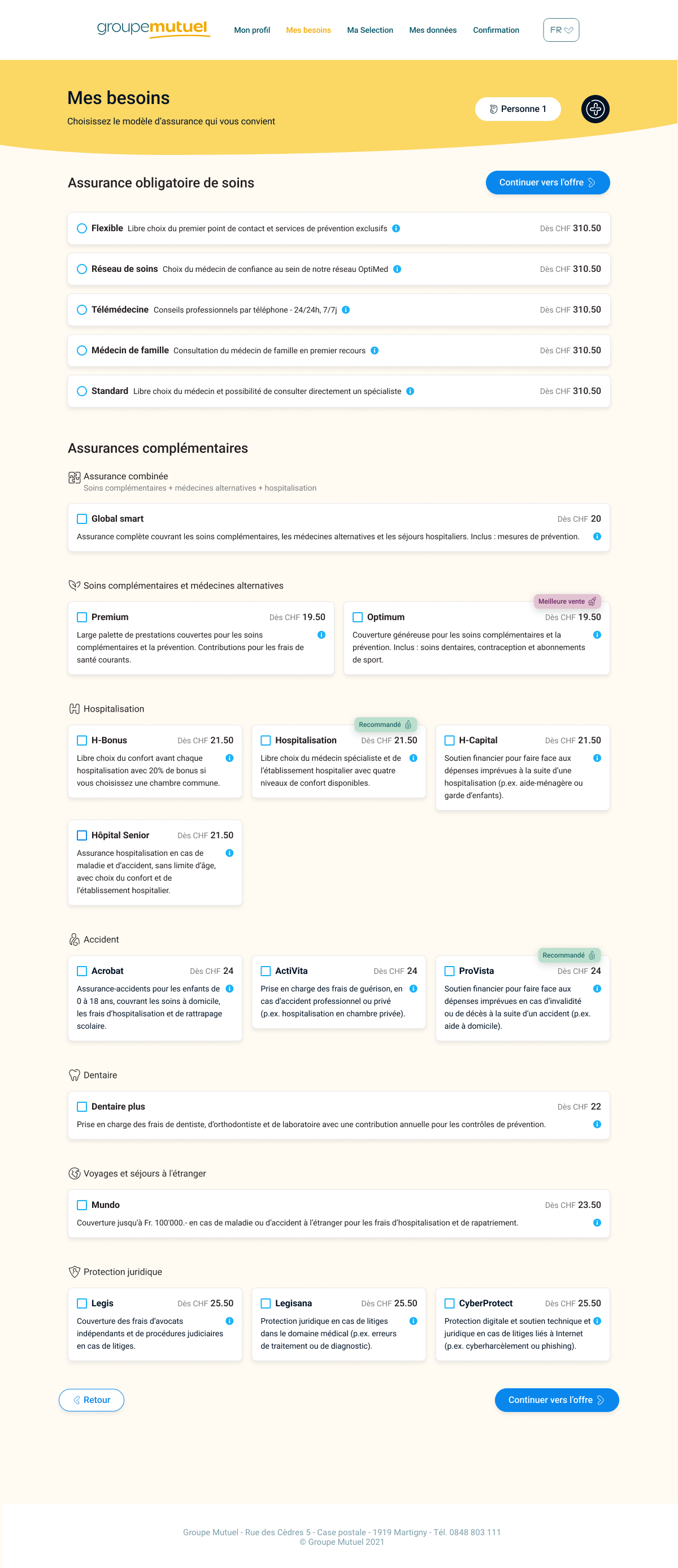
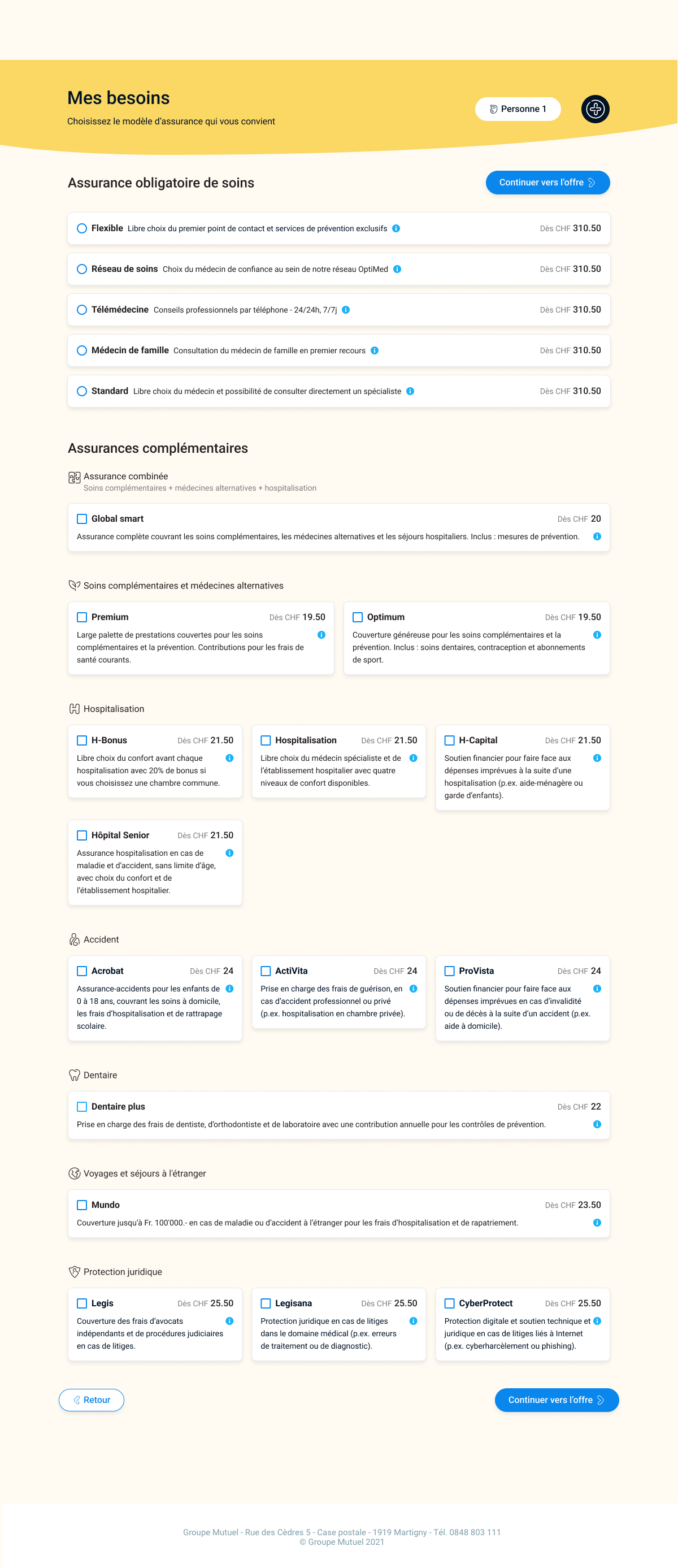
Subscription platform—product selection with/without badges


Access the subscription platform.

Senior Designer
UX / Product & Service / Strategic Design Thinking
Profile
I am a Senior Strategic Designer and UX Lead with over a decade of experience transforming complex business challenges into coherent, human-centric digital ecosystems. My background spans key players in the Swiss financial and insurance sectors (Groupe Mutuel, Pictet, EFG Bank), where I have consistently bridged the gap between business strategy, technology, and user needs.
My practice goes beyond interface design; I focus on Complexity-based and Futures-thinking practices to orchestrate how users and systems interact over time. I am a strong advocate for open-minded, honest environments and am dedicated to empowering teams through shared knowledge and culture.
I am currently seeking Design Leadership, Strategic Design, or Head of UX roles where I can leverage my expertise in Design Ops and systems thinking to scaffold high-performing design teams, define product visions, and drive meaningful digital transformation.
Core Expertise
- Strategic Design & Complexity: Moving beyond problem-solving to sense-making. I utilize systems thinking, network effects, and adaptive strategy to help organizations anticipate change and align their digital roadmaps with long-term business goals.
- Service Design & CX: Orchestrating end-to-end experiences across physical and digital touchpoints. I specialize in aligning front-stage user journeys with back-stage operational processes to reduce friction and cost.
- Design Ops & Management: Building the "machine" that builds the design. I have a proven track record of scaling design maturity by standardizing tools, establishing governance models, defining metric frameworks, and mentoring distributed teams.
Skills & Methods
Methodological
- Frameworks: Design Thinking, Systems Thinking, Cynefin Framework, Agile/Lean UX.
- Strategy: Value Proposition Design, Business Model Canvas, Jobs To Be Done (JTBD).
- Research: Hypothesis-driven Research, Qualitative (Interviews) & Quantitative Analysis, Usability Testing, Heuristic Evaluation.
Technical & Operational
- Design Craft: Information Architecture, Atomic Design, Wireframing, Rapid Prototyping.
- Mapping: Service Blueprints, Customer Journey Maps, Ecosystem Mapping.
- Metrics: UX Measurement (SUPR-Q, NPS, CSAT) & Product Metrics (HEART Framework).
- Tools: Figma, Maze, Qualtrics, ContentSquare, PowerBI (CX Dashboards).
Leadership
- Workshop Facilitation & Co-creation
- Team Mentorship & Empowerment
- Stakeholder Management & Evangelism
Discussion